
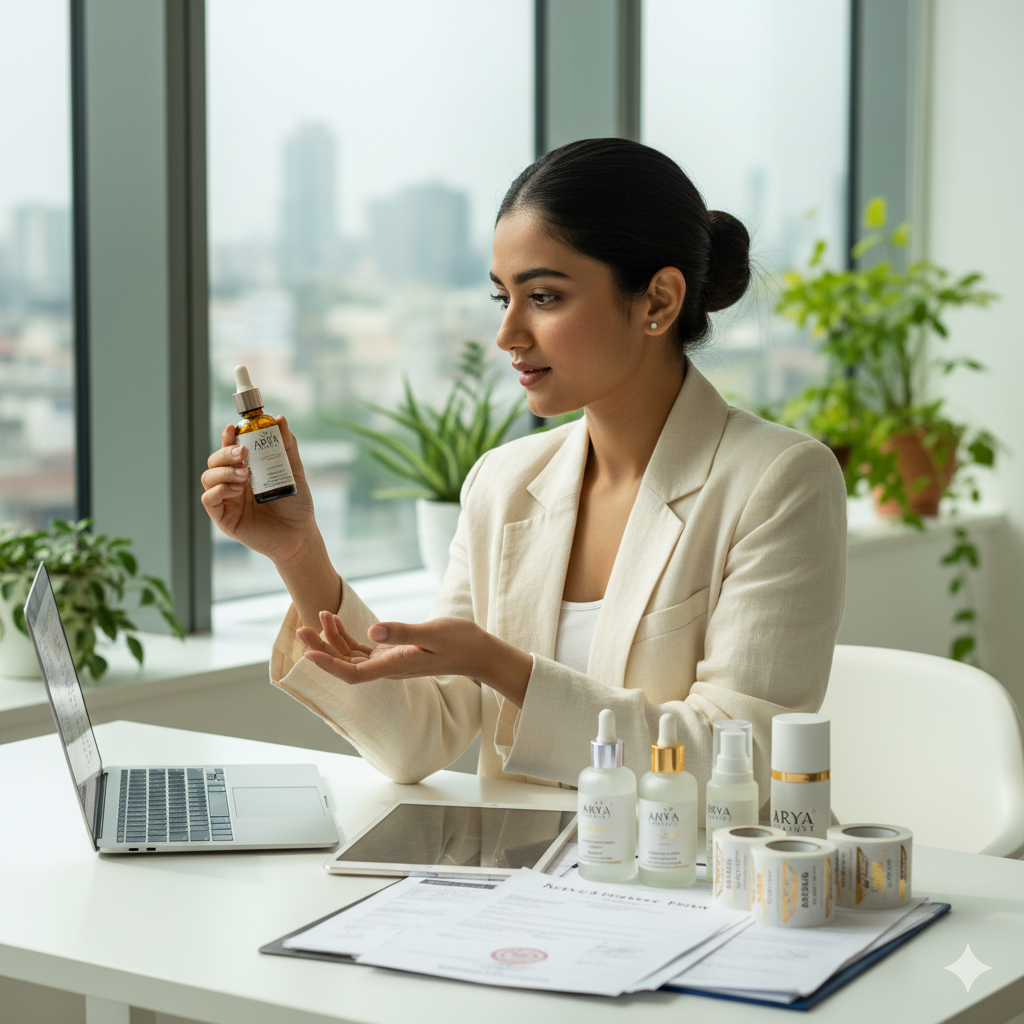
Documents and Licenses Required to Sell, Trade or Manufacture Cosmetics Products in India (2025 Guide for Startups)
India’s cosmetic market is one of the fastest-growing in Asia, driven by rising beauty awareness, herbal trends, and booming e-commerce platforms like Amazon, Flipkart, Meesho, Nykaa, and JioMart.
If you’re planning to sell, trade, or manufacture cosmetic products in India—whether online or through retail—you must follow certain legal procedures and obtain proper licenses.
This guide explains all the documents, registrations, and licenses required to legally start a cosmetic business in India in 2025, including manufacturing, wholesale trading, and online selling.
🧾 1. Understanding Cosmetic Regulation in India
Cosmetics in India are regulated under the Drugs and Cosmetics Act, 1940, and the Drugs and Cosmetics Rules, 1945.
These rules ensure that products are safe, correctly labeled, and manufactured in hygienic conditions.
The main authorities involved:
-
State Drug Control Department (FDA) – for manufacturing and selling within the state.
-
CDSCO (Central Drugs Standard Control Organization) – for import approval and national regulation.
🏭 2. If You Want to Manufacture Cosmetics in India
To manufacture cosmetics (creams, soaps, lotions, makeup, shampoo, etc.), you must obtain a Cosmetic Manufacturing License from the State Drug Control Department.
🔹 Required License:
Form 31 – Application
Form 32 – Manufacturing License
🔹 Key Requirements:
-
A manufacturing unit that meets Good Manufacturing Practices (GMP).
-
Qualified technical staff (manufacturing chemist).
-
Proper layout with sections for mixing, filling, packing, labeling, and storage.
🔹 Documents Required:
-
Application Form (Form 31)
-
Site plan and layout of premises
-
Ownership or rental proof of factory
-
List of manufacturing equipment and machinery
-
Details of manufacturing chemist (qualification & experience)
-
Product formula and manufacturing process details
-
Water analysis report (purity certificate)
-
No Objection Certificate (NOC) from local authority
-
Pollution Control NOC
-
Electricity and safety details
-
GMP and hygienic compliance certificate
-
List of raw materials and suppliers
-
Product label and packaging sample draft
-
Company registration documents
Once verified, the State Drug Controller issues the license under Form 32.
🧪 3. If You Want to Manufacture Through a Third-Party / Loan License
If you don’t own a factory but want to sell under your own brand name, you can apply for a Loan License.
🔹 Required Forms:
-
Form 31-A (Application)
-
Form 32-A (License)
This allows you to manufacture cosmetics through an already licensed manufacturer — ideal for private label or herbal brand startups (like Kritayu, Lotus, etc.).
🔹 Required Documents:
-
Agreement with third-party manufacturer
-
Manufacturer’s license copy
-
Brand authorization letter
-
Product details and label design
-
Company registration documents
-
GST & trademark certificates
🏬 4. If You Want to Sell or Trade Cosmetics (Offline or Online)
You don’t need a manufacturing license if you’re just selling, trading, or distributing cosmetics made by licensed manufacturers.
However, you must ensure products come from approved and registered sources.
🔹 Required Registrations and Licenses:
| Registration Type | Purpose | Where to Apply |
|---|---|---|
| Business Registration (Udyam/MSME or Pvt. Ltd/LLP) | Legal entity setup | MCA / Udyam Portal |
| GST Registration | For taxation and e-commerce compliance | GST Portal |
| Trade License / Shop & Establishment License | To operate retail or office premises | Local Municipal Authority |
| Legal Metrology Registration | To comply with MRP, weight, and labeling rules | Department of Legal Metrology |
| Trademark Registration | To protect brand name and logo | IP India Portal |
| Import License (if importing cosmetics) | To import and sell foreign brands | CDSCO |
| Authorization Letter | If selling someone else’s brand officially | Provided by brand owner |
| E-commerce Portal Registration | To sell on Amazon, Flipkart, Meesho, etc. | Respective seller portals |
💼 5. Documents Required for Cosmetic Trading & Online Selling
-
GST Certificate
-
Udyam/MSME Certificate
-
PAN Card & Aadhaar Card of Business Owner
-
Address Proof (Office/Shop)
-
Trademark Registration (for your brand)
-
Product Purchase Invoice from Manufacturer
-
Authorization Letter (if distributing)
-
Legal Metrology Certificate (for packaging & labeling compliance)
-
Bank Account Proof (for business)
-
Professional Tax / Shop Act License (for retail)
📦 6. Packaging and Labeling Rules for Cosmetics in India
Every cosmetic product must follow Rule 148 of the Drugs and Cosmetics Rules, 1945.
Mandatory details on each cosmetic label:
-
Product name
-
Manufacturer’s name and address
-
Manufacturing license number
-
Batch number
-
Manufacturing and expiry date
-
Net content (in grams/ml)
-
List of ingredients in descending order
-
Caution/warning if applicable (e.g., “for external use only”)
Improper labeling can lead to product seizure or penalties by authorities.
🌿 7. Additional Approvals for Herbal or Ayurvedic Cosmetics
If you are manufacturing herbal, ayurvedic, or natural cosmetics, you may also require an AYUSH License from the State AYUSH Department.
AYUSH License Categories:
-
Classical Ayurvedic Products – based on traditional formulations.
-
Proprietary Ayurvedic Products – new herbal combinations.
Required Documents:
-
Application form for AYUSH license
-
Manufacturing premises details
-
Formula and list of raw herbs used
-
Qualified Ayurvedic practitioner/chemist details
-
Proof of safety and efficacy (for proprietary formulas)
-
GMP certificate and pollution clearance
⚙️ 8. Step-by-Step Process to Start a Cosmetic Business in India (2025)
-
Finalize your product category – skincare, haircare, herbal, or makeup.
-
Choose your model – own manufacturing or third-party manufacturing.
-
Register your business (Udyam / Pvt Ltd / LLP).
-
Apply for GST and Shop License.
-
Get your Manufacturing or Loan License from the Drug Control Department.
-
Design packaging and labels per D&C Rules.
-
Register your Trademark for brand protection.
-
List your products on e-commerce portals or set up your retail store.
-
Maintain records of invoices, quality checks, and safety reports.
💡 9. Tips for New Cosmetic Entrepreneurs
-
Focus on natural and cruelty-free ingredients for better brand acceptance.
-
Always source materials from certified suppliers.
-
Get product testing done for skin safety and stability.
-
Build strong branding and packaging for online visibility.
-
Ensure full regulatory compliance before launch to avoid penalties.