September 2025

How To Rank Products on Amazon’s 1st Page in 2025-2026

Introduction

In 2025, the Amazon marketplace is more competitive than ever, with millions of sellers trying to secure visibility. Getting your product to rank on Amazon’s 1st page is no longer optional—it’s a necessity for driving consistent sales.

According to research, 70% of Amazon shoppers never go beyond the first page of search results. This means if your product doesn’t appear in the top listings, you’re losing potential sales. The key to ranking higher lies in Amazon SEO, mastering the A9 Algorithm, and optimizing your product listings.

This guide breaks down proven strategies on how to rank products on Amazon’s 1st page in 2025-2026 and gain a competitive edge.


Understanding Amazon’s A9 Algorithm in 2025-2026

Amazon’s A9 Algorithm decides product ranking based on two main factors:

1. Relevance (Matching Stage)

Amazon checks if your product is relevant to the buyer’s search. This depends on:

  • Product Title with primary keywords.

  • Backend Keywords (hidden search terms).

  • Bullet Points & Features with integrated keywords.

2. Performance (Ranking Stage)

After matching, Amazon ranks products based on:

  • CTR (Click-Through Rate): Do customers click on your product?

  • CVR (Conversion Rate): Do they buy after clicking?

  • Sales History, Reviews & Ratings: Strong performance boosts ranking.

👉 In short, relevance helps you get found, performance keeps you on the 1st page.


How To Rank Products on Amazon’s 1st Page in 2025-2026

🔑 1. Perform Advanced Keyword Research

The foundation of Amazon SEO is keyword optimization.

  • Use tools like Helium 10, Jungle Scout, or Amazon Auto-Suggest.

  • Focus on long-tail keywords with buyer intent.

  • Place them in your title, bullet points, description, and backend keywords.

🏷 2. Optimize Product Title for Amazon SEO

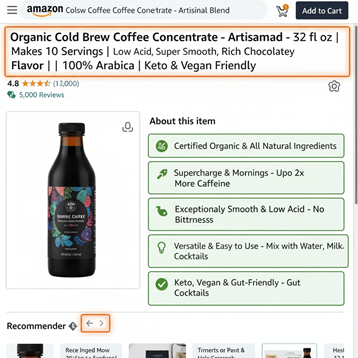
Your title is the most important factor for ranking. Best practices:

  • Start with your brand name.

  • Add primary keywords naturally.

  • Include USPs (unique selling points).

  • Keep it readable and compliant with Amazon guidelines.

✅ Example: Reach2Globe Bluetooth Earbuds | Noise Cancelling | 30H Playtime | Waterproof | 2026 Edition

✍️ 3. Write Compelling Bullet Points & Descriptions

Amazon buyers scan listings quickly. Use this space to:

  • Highlight key benefits and features.

  • Address customer pain points.

  • Integrate secondary keywords naturally.

  • Use A+ Content (Enhanced Brand Content) if eligible for better conversions.

🔍 4. Maximize Backend Keywords (Search Terms)

Backend keywords help Amazon connect your product to hidden search queries.

  • Use all 250 characters wisely.

  • Add synonyms, misspellings, and alternate terms.

  • Avoid repetition, brand names, and irrelevant keywords.

📸 5. Use High-Quality Images & Videos

Images directly impact CTR and CVR. In 2025-2026, Amazon favors listings with strong visuals.

  • Upload high-resolution images (main image on white background).

  • Show multiple angles of the product.

  • Add lifestyle images showing usage.

  • Include product demo videos where possible.

⭐ 6. Generate Positive Reviews & Ratings

Reviews are a critical Amazon ranking factor.

  • Encourage buyers to leave genuine reviews.

  • Maintain a 4+ star rating.

  • Respond politely to negative feedback.

✅ Pro Tip: Use Amazon’s Request a Review feature inside Seller Central.

💰 7. Set Competitive & Dynamic Pricing

Price influences conversion rates and Buy Box eligibility.

  • Benchmark against competitors regularly.

  • Use dynamic pricing tools to adjust in real time.

  • Balance competitiveness with profit margins.

🚀 8. Improve CTR & CVR with Optimization

Amazon monitors how shoppers interact with your listing. To boost CTR (click-through rate):

  • Use keyword-rich, attractive titles.

  • Add clear main images.

  • Highlight unique features in bullet points.

To boost CVR (conversion rate):

  • Provide complete product information.

  • Use trust signals (warranty, guarantees).

  • Offer fast shipping (Prime-eligible products rank better).


Extra Tips to Rank Higher on Amazon in 2025-2026

  • Leverage Amazon Advertising (PPC): Sponsored ads can help push new products to page 1.

  • Win the Buy Box: Products with Buy Box eligibility automatically gain higher visibility.

  • Use Amazon Brand Analytics: Analyze customer behavior and optimize accordingly.

  • Stay Updated with Amazon Policies: Avoid suppressed listings due to violations.


Final Thoughts

Ranking on Amazon’s 1st page in 2025-2026 is achievable with the right combination of Amazon SEO, listing optimization, competitive pricing, and strong customer engagement.

By focusing on keywords, CTR, CVR, reviews, and compliance with the A9 Algorithm, you can significantly boost your product ranking, increase visibility, and drive higher sales.

If you’re looking for professional guidance, Reach2Globe Technologies specializes in helping sellers rank their products on Amazon’s first page with proven SEO strategies and optimization techniques.


FAQs

Q1: How long does it take to rank a product on Amazon’s 1st page in 2025-2026?
A: It depends on product category, competition, and optimization. With proper SEO, many products can rank within 30–90 days.

Q2: What is the fastest way to rank on Amazon?
A: Optimize your listing, run Amazon PPC campaigns, generate reviews, and use high-demand keywords.

Q3: Do I need reviews to rank on Amazon’s first page?
A: Yes, reviews and ratings are essential performance factors for A9. More positive reviews = better chances to rank.

Q4: Does Amazon favor Prime-eligible products?
A: Absolutely. Prime products rank higher since they align with Amazon’s customer-first policy.

Q5: Can I rank without advertising?
A: Yes, with strong organic SEO, but ads can accelerate the process. Many sellers use a mix of organic optimization + PPC campaigns.


👉 Apply these strategies consistently, and you’ll master how to rank products on Amazon’s 1st page in 2025 and secure long-term growth.

How-To-Increase-Product-Visibility

How To Increase Product Visibility on Amazon in 2025-2026

Introduction

In 2025-2026, Amazon continues to dominate global eCommerce with over 300 million active customers. But with millions of sellers competing for attention, the biggest challenge is product visibility. Simply listing a product on Amazon isn’t enough—you need to optimize it strategically so customers can actually find it.

The secret lies in Amazon SEO and mastering the A9 Algorithm. This algorithm decides which products show up in search results and how they are ranked. By understanding how it works and applying proven optimization strategies, sellers can rank higher, gain more visibility, and increase sales on Amazon in 2025-2026.

This guide will walk you through the best ways to improve your product visibility step by step.


Understanding the Amazon A9 Algorithm in 2025-2026

Amazon’s A9 algorithm evaluates products in two key phases:

1. Matching Stage (Relevance)

Amazon first checks if your product is relevant to a customer’s search. It looks at:

  • Product Title (primary keywords)

  • Back-End Keywords (hidden search terms)

  • Bullet Points & Key Features (USPs with keywords)

2. Ranking Stage (Performance)

Once matched, Amazon decides where to rank your listing by analyzing:

  • CTR (Click-Through Rate): Are shoppers clicking on your product?

  • CVR (Conversion Rate): Are visitors buying your product?

  • Sales History & Reviews: Strong sales and positive reviews boost rankings.

👉 In short: Relevance gets you found, performance keeps you ranked.


How To Increase Product Visibility on Amazon in 2025-2026

To stand out in Amazon’s crowded marketplace, follow these proven optimization strategies:

🔑 1. Conduct Smart Keyword Research

Amazon SEO starts with keywords. Use tools like Helium 10, Jungle Scout, or Amazon’s auto-suggest to find trending and long-tail keywords.

  • Focus on buyer-intent keywords.

  • Add them naturally to your title, bullet points, description, and backend search terms.

🏷 2. Optimize Product Titles

Your title is the most powerful factor for visibility. Structure it as:
Brand + Main Keyword + Product Type + USP/Benefit

Example: Reach2Globe Stainless Steel Water Bottle | Insulated | Leak-Proof | 1L Capacity

⚠️ Avoid using banned terms like best, free, hot deal.

✍️ 3. Improve Product Descriptions & Bullet Points

  • Highlight benefits over features.

  • Address customer pain points.

  • Use formatting, bullet points, and clear structure.

  • Leverage A+ Content (EBC) with visuals and comparison charts for better engagement.

🔍 4. Optimize Back-End Search Terms

Back-end keywords help Amazon categorize your product correctly.

  • Use the full 250-character limit.

  • Add synonyms, misspellings, and alternate spellings.

  • Exclude competitor names, repetition, and special characters.

📸 5. Use High-Quality Images

Images directly impact CTR and conversions. Ensure your images are:

  • High-resolution with a white background (main image).

  • Multiple angles showcasing features.

  • Lifestyle photos showing real-world use.

  • Infographic-style images highlighting benefits.

⭐ 6. Generate Positive Reviews & Ratings

  • Encourage happy buyers to leave reviews.

  • Aim for 4+ star ratings to build trust.

  • Respond politely to negative feedback to show professionalism.

💰 7. Set Competitive Pricing

Pricing impacts Buy Box eligibility and conversions. In 2025-2026:

  • Use competitor analysis to stay competitive.

  • Consider dynamic pricing tools to adjust automatically.

  • Balance pricing with profitability.


Final Thoughts

Mastering How To Increase Product Visibility on Amazon in 2025-2026 requires a blend of Amazon SEO, keyword optimization, strong images, compelling content, reviews, and competitive pricing.

By aligning with the A9 Algorithm’s relevance and performance factors, sellers can:

  • Improve search rankings.

  • Gain higher visibility.

  • Increase conversions and sales.

If you want expert guidance, Reach2Globe Technologies helps Amazon sellers optimize product listings, boost visibility, and scale eCommerce businesses effectively.


FAQs

Q1: How can I improve product visibility on Amazon in 2025-2026?
A: Focus on keyword research, optimized titles, backend search terms, quality images, competitive pricing, and reviews.

Q2: Why isn’t my product showing up on Amazon?
A: Common issues include incomplete listings, suppressed content, non-compliance with guidelines, or poor Buy Box eligibility.

Q3: What are the most searched products on Amazon in 2025-2026?
A: Popular searches in 2025-2026 include laptops, gaming consoles, kitchen appliances, and smart gadgets.

Q4: How do I rank higher on Amazon?
A: Improve CTR, CVR, keyword optimization, reviews, images, and pricing strategy.

Q5: What does #1 Best Seller on Amazon mean?
A: It means the product is the top-selling item in its category, gaining maximum visibility.


👉 By applying these strategies, you can boost your product visibility on Amazon in 2025-2026 and achieve long-term growth with the support of Reach2Globe Technologies.

15 Proven Strategies To Increase Sales on Amazon in 2025

Amazon is the largest e-commerce marketplace in the world, but with millions of sellers, competition is tough. To stand out and increase sales, you need the right mix of optimization, marketing, and smart selling techniques. In this guide, we’ll cover 15 proven strategies that can help you scale your Amazon business and boost revenue in 2025.


1. Optimize Your Product Listings (SEO Focus)

  • Use high-ranking keywords in titles, bullet points, and descriptions.

  • Ensure your title is clear and includes brand, product type, size, and unique features.

  • Add backend search terms to target hidden keywords.


2. Use High-Quality Product Images

  • Upload HD images (1000x1000px+) with zoom enabled.

  • Show multiple angles and product use cases.

  • Add lifestyle images to connect emotionally with buyers.


3. Improve Product Descriptions with A+ Content (EBC)

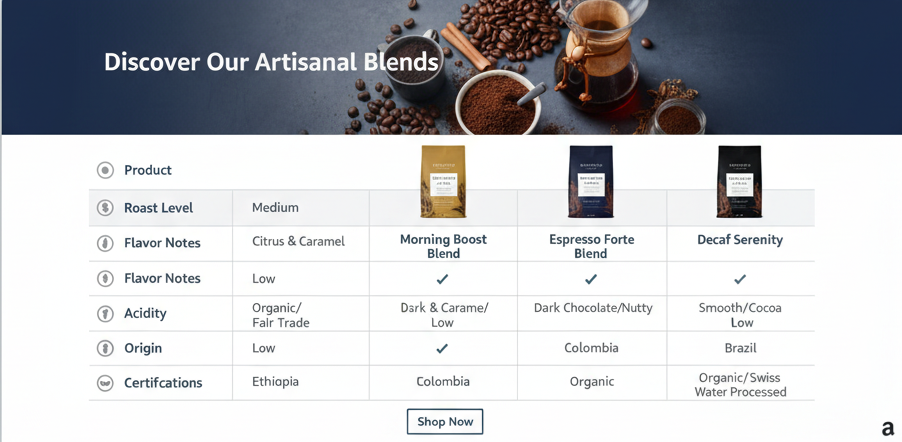
  • Use Amazon A+ Content (Enhanced Brand Content) to showcase product features with images, comparison charts, and infographics.

  • This improves conversions and boosts customer trust.

a+ content amazon


4. Get More Product Reviews (Social Proof)

  • Request reviews from buyers using Amazon’s Request a Review button.

  • Offer excellent post-purchase support.

  • Participate in Amazon’s Vine Program (for brand-registered sellers).


5. Optimize for Mobile Shoppers

  • Ensure titles, bullets, and descriptions are concise.

  • Use short, impactful content that looks good on mobile.


6. Competitive Pricing Strategy

  • Use Amazon’s Automated Pricing Tool to stay competitive.

  • Keep track of competitor prices to win the Buy Box.


7. Leverage Amazon SEO (A9 Algorithm)

  • Focus on conversion rate, relevance, and sales history to rank higher.

  • Continuously test and update keywords.


8. Run Sponsored Ads (Amazon PPC)

  • Use Sponsored Products, Sponsored Brands, and Sponsored Display Ads.

  • Start with auto campaigns, then refine with manual targeting.


9. Offer Lightning Deals & Coupons

  • Run time-limited promotions to create urgency.

  • Add coupons to listings to improve click-through rates.


10. Use FBA (Fulfilled by Amazon)

  • FBA products get Prime eligibility, faster delivery, and better visibility.

  • Customers trust FBA more than FBM listings.


11. Optimize for Amazon Buy Box

  • Maintain competitive pricing, good stock levels, and high seller metrics.

  • 80–90% of Amazon sales come through the Buy Box.


12. Expand Product Line with Variations

  • Add color, size, or style variations to increase visibility.

  • Prevent customers from switching to competitors.


13. Use External Traffic Sources

  • Drive traffic from Google SEO, social media, and email marketing.

  • Use Amazon Attribution to track conversions.


14. Leverage Analytics & Reports

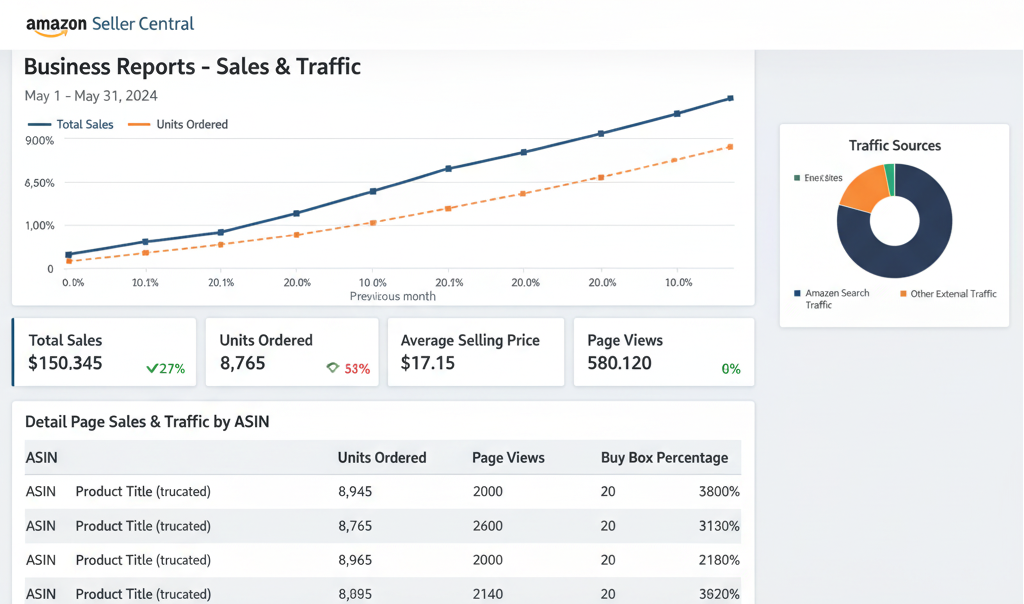
  • Use Amazon Seller Central reports to identify bestsellers and weak performers.

  • Track keywords, conversion rates, and sales trends.

dashboard screenshot with analytics graphs


15. Build a Strong Brand on Amazon

  • Enroll in Amazon Brand Registry for protection and advanced tools.

  • Create a custom Amazon Storefront with brand storytelling.


Final Thoughts

Increasing sales on Amazon in 2025 requires more than just listing products—it’s about strategic optimization, brand building, and customer engagement. By implementing these 15 proven strategies, you can boost visibility, win customer trust, and maximize your revenue.

Pro Tip: Consistency is key—regularly optimize listings, test ad campaigns, and monitor performance to stay ahead of competitors.


🔎 SEO Keywords to Include Naturally Throughout Blog:

  • How to increase sales on Amazon

  • Amazon SEO strategies 2025

  • Amazon product listing optimization

  • How to get reviews on Amazon

  • Amazon PPC tips

  • Best ways to boost Amazon sales

How to Register for FSSAI License in India (2025 Process)

If you are planning to start a food business or sell packaged products like Makhana (Fox Nuts) online, getting an FSSAI License is the first and most important step. The Food Safety and Standards Authority of India (FSSAI) ensures that food products are safe, hygienic, and meet quality standards.

In this article, we’ll walk you through the step-by-step process to register for FSSAI License in 2025.


🔑 Types of FSSAI Licenses

Before applying, you need to know which license category your business falls under:

  • Basic Registration – For small businesses with annual turnover up to ₹12 lakh.

  • State License – For businesses with turnover between ₹12 lakh – ₹20 crore (operating within one state).

  • Central License – For large businesses with turnover above ₹20 crore, or those involved in import, export, or interstate trade.

👉 For selling Makhana online, you generally need a State License if turnover exceeds ₹12 lakh.


🛠 Step-by-Step Guide to Register for FSSAI License (2025)

Step 1: Visit FoSCoS Portal

  • Go to the official FoSCoS website (Food Safety Compliance System).

  • Click on “Sign Up” and create an account using your mobile number and email ID.

Step 2: Select License Type

  • Choose Basic, State, or Central based on your business turnover and operations.

  • For online food sales like Amazon/Flipkart, select the relevant license type.

Step 3: Fill Out the Application Form

  • Form A → For Basic Registration.

  • Form B → For State/Central License.

  • Provide details such as:

    • Business name & address

    • Product type (e.g., Makhana – packaged food)

    • Contact details & ownership type

Step 4: Upload Required Documents

Keep scanned copies ready for upload:

  • Passport-size photo of applicant

  • PAN card

  • Aadhaar card / ID proof

  • Business address proof (rent agreement/electricity bill)

  • Food product details (Makhana packaging & labeling info)

  • Bank account proof

  • Company incorporation documents (if applicable)

  • NOC from local authority (for State/Central)

Step 5: Pay the Fees Online

  • Basic Registration – ₹100/year

  • State License – ₹2,000 – ₹5,000/year

  • Central License – ₹7,500/year

Step 6: Application Verification

  • The Food Safety Officer reviews your application.

  • For State/Central licenses, an inspection of your premises may be conducted.

Step 7: Download FSSAI License

  • After approval, download your FSSAI Registration Certificate.

  • You’ll receive a 14-digit FSSAI number which must be printed on all food product labels and packaging.


⏳ Processing Time

  • Basic Registration – Within 7 working days

  • State/Central License – 30 to 60 days (including inspection, if required)


🎯 Final Thoughts

An FSSAI License is mandatory in 2025 if you want to sell food products like Makhana online or offline. Without it, e-commerce platforms like Amazon and Flipkart will not allow you to list your products.

👉 So, before you start your food business journey, complete your FSSAI registration, ensure proper labeling, and grow your brand with confidence.

Selling-Makhana-Online-in-India

What Documents Are Required to Sell Makhana Fox Nuts Online in India?

What Documents Are Required to Sell Makhana Online in India?

Makhana, also known as Fox Nuts or Lotus Seeds, has become one of the most popular superfoods in India. With its growing demand in the health and snacks industry, many entrepreneurs and small businesses are looking to sell makhana online through platforms like Amazon, Flipkart, Jiomart, or their own websites.

But before you start your online business, it’s important to understand the legal documents and registrations required to sell food products in India.


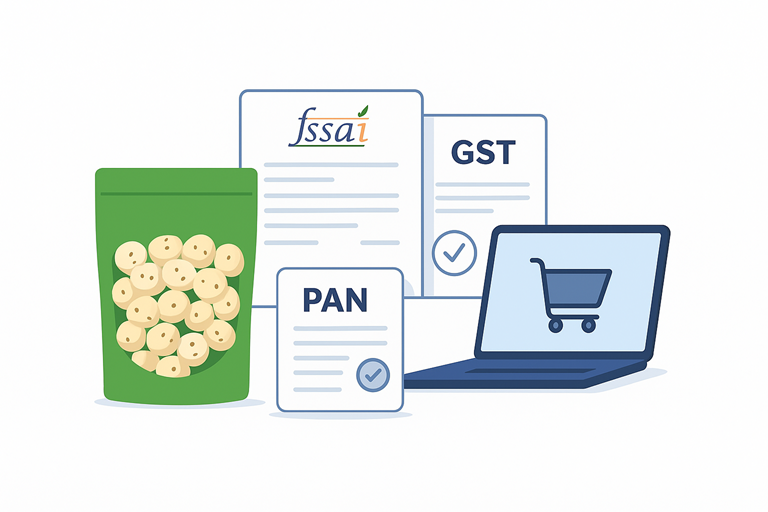
✅ 1. FSSAI Registration/License

Since Makhana is a food item, having a valid FSSAI (Food Safety and Standards Authority of India) License is mandatory.

  • Basic FSSAI Registration

  • State FSSAI License

  • Central FSSAI License

👉 Make sure to print your FSSAI number on every packet of makhana.


✅ 2. GST Registration

Most e-commerce platforms require a valid GSTIN to sell online.

  • Mandatory if your annual turnover exceeds ₹40 lakh (₹20 lakh for some states).

  • Even for lower turnovers, platforms like Amazon & Flipkart ask for GST.


✅ 3. PAN Card

A PAN Card (Individual or Business) is required for tax purposes and account verification while setting up your seller profile.


✅ 4. Bank Account Proof

You’ll need a current account in the business name (or savings account for individuals) along with a cancelled cheque/passbook copy to receive payments from marketplaces.


✅ 5. Identity & Address Proof

Documents like Aadhar Card, Voter ID, Passport, or Driving License are required for seller verification on e-commerce platforms.


✅ 6. Trademark Registration (Optional but Recommended)

If you want to build your own brand of Makhana, applying for a trademark is highly recommended. It protects your brand identity and prevents duplication.


✅ 7. Packaging & Labeling Compliance

Food packaging must follow FSSAI labeling guidelines, which include:

  • Ingredients list

  • Nutritional information

  • Expiry/Best before date

  • Net weight & MRP

  • Manufacturer & FSSAI license details


📦 Additional Documents (Sometimes Required)

  • Lab Testing Certificate – Increases customer trust and may be asked by some platforms.

  • Brand Authorization Letter – If you’re reselling someone else’s branded Makhana.


📝 Final Thoughts

Selling Makhana online in India can be a highly profitable business, given its rising demand as a healthy snack. However, before you list your products, make sure you have the right documents like FSSAI License, GSTIN, PAN, Bank Proof, and Proper Packaging Labels.

With the right compliance and quality standards, your Makhana brand can grow successfully across leading marketplaces. 🚀


👉 Pro Tip: If you’re planning to start your online Makhana business, begin with FSSAI registration and GST, as these are the first documents every platform checks before onboarding.

How to Lower Cost Per Click (CPC) and Increase ROAS on Amazon India Advertising

Running ads on Amazon India is one of the fastest ways to drive traffic and sales, but many sellers struggle with high CPCs and low ROAS. Spending more doesn’t always guarantee results—what matters is how effectively you optimize your campaigns.

The good news? By applying the right strategies, you can reduce advertising costs, increase conversions, and maximize your returns on every rupee spent.

In this blog, we’ll explain proven ways to lower CPC and boost ROAS on Amazon India.


1. Choose the Right Keywords (Focus on Long-Tail Keywords)

  • Avoid only bidding on high-competition keywords like “men’s t-shirt” or “smartphone.”

  • Use long-tail keywords such as “Men’s Cotton Casual Slim Fit Shirt”—they have lower CPCs and higher conversion rates.

  • Leverage Amazon’s Search Term Report to find high-performing keywords.

✅ Tip: Tools like Helium10, Jungle Scout, and Amazon’s Keyword Planner can help identify cost-effective keywords.


2. Optimize Product Listings for Better Conversion

Amazon’s algorithm rewards ads that convert. If your listing isn’t optimized, you’ll spend more on clicks without sales.

  • Use clear titles with keywords.

  • Upload high-quality images and lifestyle photos.

  • Write engaging bullet points and product descriptions.

  • Add A+ Content (if Brand Registered).

A highly optimized product page = lower CPC + better ROAS.


3. Use Negative Keywords to Eliminate Wasted Spend

Many sellers waste money because their ads show up for irrelevant searches.

  • Add negative keywords to block non-converting searches.

  • Example: If you’re selling “Leather Wallets”, add negative keywords like “free wallet, paper wallet, wallet images”.

  • This reduces unnecessary clicks and improves ad efficiency.


4. Segment Campaigns by Match Type

Instead of lumping all keywords in one campaign:

  • Use Exact Match for high-performing keywords.

  • Use Phrase Match for medium competition.

  • Use Broad Match carefully, mainly for keyword discovery.

This segmentation allows you to control spend and allocate budget more efficiently.


5. Adjust Bids Based on Performance

Don’t set and forget your ads.

  • Increase bids for keywords that generate sales.

  • Lower bids or pause non-performing keywords.

  • Use dynamic bidding (down only) to prevent overspending.

Continuous optimization = reduced CPC over time.


6. Target Competitor & Complementary Products

Product targeting ads can give you an edge:

  • Show ads on competitor listings with weaker reviews.

  • Target complementary products (e.g., if you sell phone cases, target smartphone listings).

  • This method often has lower CPC and higher conversion rates compared to generic keyword targeting.


7. Improve CTR with Compelling Ad Creatives

Your ad’s Click-Through Rate (CTR) affects CPC.

  • Use attractive main images.

  • Highlight offers, discounts, or USP (Unique Selling Proposition) in the title.

  • Ensure your price is competitive compared to others.

Higher CTR = lower CPC + stronger organic ranking.


8. Leverage Dayparting (Ad Scheduling)

Don’t waste ad spend during hours with low buyer activity.

  • Analyze sales reports to see when your target audience shops.

  • Run ads during peak shopping hours.

  • Pause ads at night or when sales are low.

This lowers wasted clicks and improves ROAS.


9. Focus on Retargeting & Sponsored Display Ads

Retargeting brings back customers who already viewed your product.

  • Use Sponsored Display Ads to remind them.

  • Retargeting usually has a higher conversion rate than cold traffic, improving overall ROAS.


10. Monitor ACoS and Continuously Optimize

  • Keep track of ACoS (Advertising Cost of Sales) and TACoS (Total ACoS).

  • Regularly analyze reports and optimize bids, keywords, and targeting.

  • A lower ACoS directly translates to better ROAS.


Final Thoughts

Lowering CPC and increasing ROAS on Amazon India isn’t about spending less—it’s about spending smart. By focusing on keyword optimization, negative keywords, product listing quality, bid adjustments, and competitor targeting, sellers can achieve better results without overspending on ads.

At ReachGlobe Technologies, we help Amazon sellers run cost-efficient ad campaigns that deliver maximum ROI. Whether you want to lower CPC, improve ROAS, or scale your business, our team has the expertise to guide you.

👉 Contact us today and start maximizing your Amazon advertising performance!

How to Boost Product Visibility on Amazon India Without Spending Money on Advertisement

Selling on Amazon India can be highly profitable, but many sellers struggle to gain visibility because they rely only on paid ads. The good news? You can improve your product ranking and increase sales organically without spending a single rupee on advertising. By optimizing your product listings and following smart selling practices, you can reach more customers and drive growth naturally.

In this blog, we’ll share proven strategies to boost your product visibility on Amazon India without ads.


1. Optimize Product Titles with Relevant Keywords

Your product title is the first thing customers see and also the most important factor for Amazon SEO.

  • Include primary keywords that buyers are searching for.

  • Add brand name, product type, key features, size, and color.

  • Keep it clear and within Amazon’s character limit.

✅ Example: “Men’s Cotton Slim Fit Casual Shirt | Full Sleeve | Check Pattern | Stylish Everyday Wear”


2. Use High-Quality Product Images

Clear and attractive images help increase click-through rates.

  • Upload at least 6–7 images covering multiple angles.

  • Use a white background for the main image.

  • Highlight features with infographics and lifestyle shots.

Better images = better visibility + higher conversion.


3. Write Detailed, Keyword-Rich Descriptions

Your product description should not just describe but also sell the product.

  • Use bullet points for easy readability.

  • Include keywords naturally in descriptions and bullet points.

  • Highlight benefits, usage, and unique features.

✅ Example: Instead of just writing “Cotton shirt for men”, write “Breathable 100% Cotton Slim Fit Shirt – Perfect for Office, Casual Outings & Daily Comfort.”


4. Leverage Backend Keywords (Search Terms)

Amazon allows sellers to add hidden keywords in the backend.

  • Add synonyms, alternative spellings, and regional terms.

  • Avoid repeating words already in the title.

  • Focus on keywords your audience is most likely to use.

This improves visibility without cluttering your product title.


5. Encourage Positive Customer Reviews

Reviews build trust and boost organic ranking.

  • Provide excellent customer service to encourage feedback.

  • Politely request reviews from satisfied buyers.

  • Respond quickly to queries to maintain a high seller rating.

Remember: More positive reviews = better visibility.


6. Focus on Competitive Pricing

Amazon’s algorithm considers pricing as a ranking factor.

  • Regularly compare your price with competitors.

  • Offer discounts, coupons, or bundles (if possible).

  • Ensure your price matches the value and quality of the product.


7. Use A+ Content (if Brand Registered)

If you have Amazon Brand Registry, you can use A+ content to make your listings stand out.

  • Add high-quality images, comparison charts, and engaging descriptions.

  • This improves conversion rate, which boosts organic ranking.


8. Improve Your Product Listing SEO Regularly

Amazon SEO is not a one-time task. Keep updating your listings with:

  • Trending keywords

  • Seasonal variations (festivals, occasions, events)

  • New product features

The more relevant your listing, the higher your chances of showing up in search results.


9. Increase External Traffic (Free Methods)

Drive organic traffic to your Amazon product page using:

  • Social media platforms like Instagram, Facebook, and WhatsApp.

  • YouTube reviews or unboxing videos.

  • Blog posts and forums related to your niche.

The more traffic your listing gets, the better Amazon rewards it with visibility.


10. Maintain Excellent Seller Performance

Amazon promotes reliable sellers in search results. Ensure you:

  • Ship products on time.

  • Maintain low return rates.

  • Provide excellent customer service.

A strong seller rating improves product visibility without any ads.

Sell Handmade Products Online from Home | Top Trending Homemade Products to Sell Online

Sell Handmade Products Online from Home | Top Trending Homemade Products to Sell Online

In today’s digital-first world, more and more people are turning their creativity into a profitable business. If you have a passion for crafting, painting, knitting, or designing unique items, you can easily sell handmade products online from home and reach customers all over India and even globally.

With platforms like Amazon, Flipkart, Etsy, and social media marketplaces, it has never been easier to turn your hobby into a full-time business. In this blog, we’ll guide you on how to sell handmade products online from home and also share a list of the top trending homemade products to sell online in 2025-2026.


✅ Why Sell Handmade Products Online from Home?

Selling handmade products gives you the opportunity to:

  • Turn your creativity into a profitable business.

  • Work flexibly from the comfort of your home.

  • Reach a wide audience without heavy investment.

  • Build a unique brand with loyal customers.

  • Promote sustainable and eco-friendly products.


✅ How to Start Selling Handmade Products Online from Home

1. Choose Your Niche

Decide which type of handmade items you want to sell. Focus on a category you are skilled at and that has market demand.

2. Set Up Your Online Store

You can sell your products on:

  • Marketplaces: Amazon Karigar, Etsy, Flipkart, Meesho, Craftsvilla.

  • Social Media: Instagram Shop, Facebook Marketplace, WhatsApp Business.

  • Own Website: Build your brand identity with a professional e-commerce website.

3. Create High-Quality Product Listings

  • Use clear, attractive images.

  • Write keyword-optimised product descriptions.

  • Highlight USPs like “100% handmade,” “eco-friendly,” “authentic craftsmanship.”

4. Decide Pricing & Shipping

  • Calculate material + labor + packaging + delivery costs.

  • Offer affordable pricing while maintaining profit margins.

  • Partner with courier services for doorstep pickup & delivery.

5. Market Your Products Online

  • Use Instagram reels & Facebook ads.

  • Collaborate with influencers.

  • Run seasonal promotions & discounts.

  • Optimize product listings for Google and marketplace searches.


✅ Top Trending Homemade Products to Sell Online in 2025-2026

If you are looking for profitable handmade product ideas, here are the most in-demand categories:

  1. Handmade Jewellery – Beaded earrings, resin pendants, oxidized jewellery.

  2. Home Decor Items – Macramé wall hangings, candles, dreamcatchers, terrariums.

  3. Organic Skincare Products – Homemade soaps, lip balms, body scrubs, face packs.

  4. Hand-Painted Items – Customized bottles, mugs, plates, shoes.

  5. Crochet & Knitted Products – Baby clothes, handbags, blankets, table mats.

  6. Handmade Stationery – Planners, journals, scrapbooks, bookmarks.

  7. Eco-Friendly Products – Jute bags, bamboo crafts, reusable cloth bags.

  8. Festive & Gifting Items – Rakhi, Diwali hampers, personalized gifts.


🎥 Video Guide: How to Sell Handmade Products from Home

For a step-by-step explanation and tips, check out this detailed video:
👉 Watch How to Sell Handmade Products Online from Home


✅ Tips to Succeed in Selling Handmade Products Online

  • Focus on unique designs that stand out.

  • Maintain consistent product quality.

  • Use SEO keywords in product titles and descriptions.

  • Provide excellent customer service.

  • Keep up with latest trends in handmade products.


🚀 Final Thoughts

The demand for homemade products online in India is growing rapidly, as more people prefer unique, sustainable, and personalized items. Whether you’re making jewellery, skincare, or decor, there is a huge online market waiting for your creations.

By following the above steps and focusing on trending product categories, you can build a profitable business right from your home.

If you want expert guidance in product listing, online marketing, and e-commerce growth strategies, ReachGlobe Technologies can help you launch and scale your handmade business successfully.


🔑 SEO Keywords Used:
Sell handmade products online from home | Homemade products to sell online 2025 | Trending handmade products | Best homemade products for online business | How to sell handmade products in India | Handmade jewellery online | Handmade products business from home

Scroll to Top